“At 21, I became a solo mum for the first time. Later that same year, I met the man who would become my husband, and by 23 we were married, growing our young family together with my second daughter and my stepdaughter. At 26, we welcomed our fourth child — our son — into the world, and life quickly became far more complex than I ever imagined.
In his first five years of life, our son experienced several serious, life-threatening illnesses. One of the most frightening moments came when he was two and a half years old and nearly died. My husband and I had to leave our three daughters behind in Canterbury and urgently fly with him to Starship Hospital in Auckland, placing enormous trust in family, friends, and others back home to care for our girls while we focused on keeping our son alive.
Those experiences changed me deeply. They taught me how fragile life can be, how vulnerable families become during crisis, and how vital community support is when people are struggling to hold everything together.
By the time I was 27, the Christchurch earthquakes had added another layer of fear and uncertainty to our lives. The constant shaking heightened my anxiety and left me feeling powerless. I was battling anxiety and depression while trying to care for my family and navigate the ongoing uncertainty around my son’s health. I realised I needed something that would help me regain focus and a sense of control.
At 28, I began volunteering with Civil Defence Emergency Management (CDEM). What initially started as a way to confront my fear of natural disasters and crises beyond my control unexpectedly became the turning point that reshaped my life. Volunteering gave me purpose, direction, and confidence at a time when I had lost much of myself in survival mode.
Then at 30, while trying to convince a friend to join CDEM with me, she agreed on one condition — that I also volunteer at the local foodbank. I said yes, thinking I had spare time, so why not? I had no idea how profoundly that decision would shape the next decade of my life.
Through both CDEM and the foodbank, I found something I had not realised I was missing: community, purpose, and belief in myself again. I formed genuine and lasting friendships with people who saw strengths in me before I fully recognised them myself. I found mentors who encouraged me to grow, step forward, and believe that I was capable of more.
Alongside these formal volunteering roles, I was also heavily involved in my children’s schools and wider community for many years. I regularly supported school camps as parent help, coached hockey, and volunteered as a Kea leader through Scouts. These roles may have seemed smaller on the surface, but they reinforced many of the same values that shaped the rest of my journey — service, leadership, encouragement, and creating safe, supportive environments where children and families could thrive.
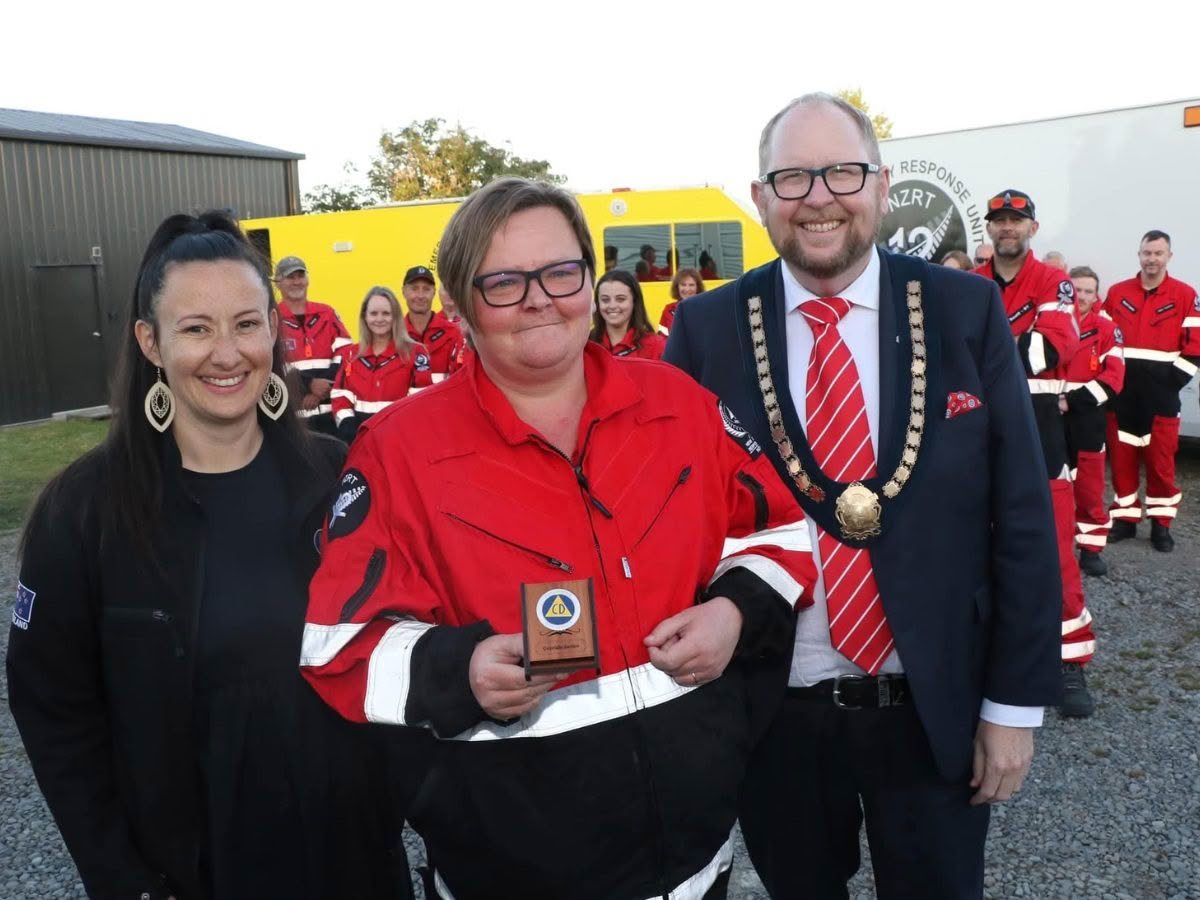
Over 14 years with CDEM, I gained practical and personal skills that shaped both my life and career. I began as a welfare team member, supporting communities and families during emergencies and learning firsthand how vital compassionate, organised support is during times of crisis. As my confidence and experience grew, I joined Sector Post, taking on greater operational responsibilities within emergency response environments. I then briefly worked for the council as a CDEM In Schools educator before later becoming a member of the New Zealand Response Team 12 (NZRT12), where I further developed skills in emergency management, communication under pressure, teamwork, leadership, risk assessment, and remaining calm during high-stress situations. Along the way, I also gained NZQA standards and formal training through my volunteering, building recognised qualifications and confidence that later became invaluable professionally.
At the foodbank, where I volunteered for six years before a year away and later returned as coordinator for another four years, I learned entirely different but equally important lessons. I learned that helping people is not about rescuing them — it is about walking alongside them with dignity, compassion, and respect while they navigate difficult seasons of life.
Many of the families who came through our doors were carrying invisible burdens: poverty, trauma, grief, housing insecurity, mental health struggles, family violence, and systems that often seemed impossible to navigate. Because of my own lived experiences — mental health struggles, raising a medically complex child, financial pressure, and later supporting my husband through a serious injury and a long fight with ACC — I understood what it felt like to be exhausted by systems that were supposed to help. Those experiences gave me empathy, resilience, and the ability to connect with people without judgement. They also taught me the importance of advocacy, especially for people who are simply trying to survive.
Over time, I began to recognise a larger issue. There often seemed to be a disconnect between community need, local government, and central government. The people working directly alongside families could see the realities communities were facing long before wider systems responded. I wanted to be part of creating change and helping bridge those gaps.
Before having children, I had originally started studying nursing and a Level 4 Certificate in Social Services, but life had taken me in another direction and I never completed it. At 35, encouraged by the people around me who believed in my potential, I returned to study while raising four children, volunteering, and managing family life. I undertook Health Science studies in Environmental and Public Health, determined to finally finish something I had once started and prove to myself that I was capable.
Balancing study, motherhood, volunteering, marriage, and community commitments was challenging, but it became another important step in rebuilding my confidence and identity.
At 37, I returned to the very place that had sparked so much of my journey — the foodbank — this time as coordinator. Leading the foodbank allowed me to combine lived experience, compassion, leadership, and practical skills to support both volunteers and families within the community. It reinforced my belief that some of the most important change happens at grassroots level through relationships, trust, advocacy, and simply showing up consistently for people.
Last year, at 41, I joined the National Public Health Service as a Health Protection Officer — a role shaped not only by formal study, but by years spent beside families during crisis, uncertainty, and recovery.
Looking back now, I will forever be grateful for the experiences volunteering gave me. Beyond the personal healing, friendships, and sense of purpose, volunteering also gave me tangible, transferable skills, recognised NZQA qualifications, leadership experience, operational emergency response skills, advocacy skills, crisis management abilities, governance exposure, and ultimately a pathway into professional employment.
After years spent at home raising children, my CV could easily have reflected only gaps in employment history. Instead, volunteering gave me practical experience, confidence, and the foundation that opened doors into public health.
The years I spent serving my community shaped me in ways that are not always immediately visible. They shaped my resilience, leadership, compassion, and understanding of people. They taught me that meaningful work often happens quietly — through listening, building trust, standing beside people during hardship, and helping others rediscover their own strength. Those experiences did not simply build my career; they built the person I became.
Perhaps one of the things I am most proud of is seeing the impact community service has also had on my children. Now teenagers and young adults, they too have answered the call of their community in their own ways, stepping forward to help others and contribute where they can. Watching that legacy continue into the next generation reminds me that service, compassion, and community are values that ripple outward far beyond ourselves.
So, for anyone considering volunteering, I would simply say: “Carpe Diem” — seize the day. You never know how one small step into your community could completely change the course of your life.”
Finding Purpose Through Volunteering: Gabrielle’s Story
Share this page with a friend
Facebook
LinkedIn
Email